Музей истории города Чирчик
Interesting facts about the planet Venus
August 03, 2022

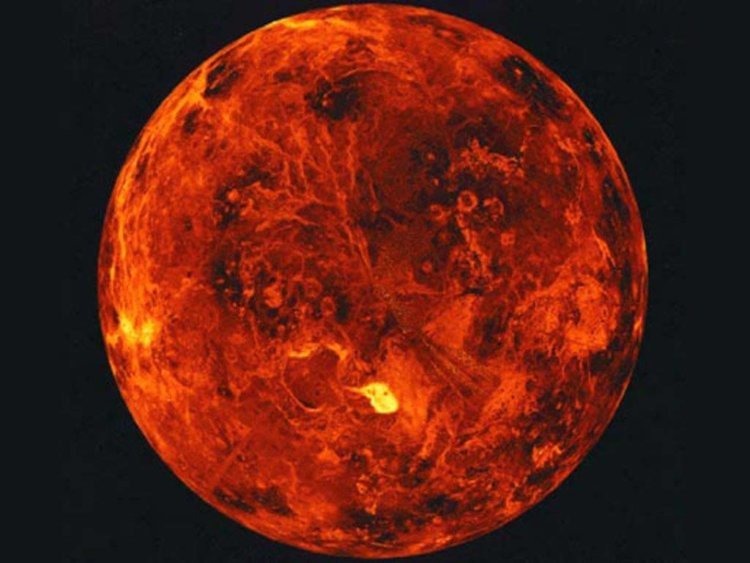
Venus is the second planet from the Sun in our solar system. It can be seen from Earth as the brightest object in the sky after the Sun and Moon. This planet is known as the evening star when it appears in the east at sunrise and sets in the west at sunset. In this article, we will learn more about the planets of the solar system, as well as all the characteristics of Venus and its atmosphere. The observation of the planet Venus was known in ancient times as the evening star Hesperus and the morning star Phosphorus or Lucifer. This is due to the distances from the Sun between the orbits of Venus and the Earth. Because of the great distances, Venus is not visible until three hours before sunrise or three hours after sunset. Early astronomers thought that Venus might actually be two separate bodies.

When viewed through a telescope, the planet has phases, just like the moon. When Venus is in full phase, you can see less of it because it is farther from the Sun than the Earth. The maximum brightness level is reached when it is in the rising phase.

The phases and positions of Venus in the sky are repeated in the synodic period for 1.6 years. Astronomers call this planet Earth’s sister. This is because they are very similar in terms of dimensions such as mass, density, and size. They both formed at the same time and formed before the same time and condensed from a homogeneous nebula. Earth and Venus are very similar planets.

It is believed that if it were at the same distance from the Sun, life could exist on Venus, as on Earth. Being in a different region of the solar system, it has become a completely different planet than ours.

Main characteristics

Venus is a planet without an ocean, surrounded by a very heavy atmosphere composed mostly of carbon dioxide and almost no water vapor. Clouds are made up of sulfuric acid. The atmospheric pressure we encounter on Earth is 92 times higher than on our planet. This means that an ordinary person cannot be on the surface of this planet for even a minute.

It is also called the hot planet because its surface temperature is 482 degrees. This temperature is caused by a large greenhouse effect created by the dense and heavy atmosphere. If the greenhouse effect is achieved by trapping heat in the much thinner atmosphere on our planet, imagine the effect of trapping heat in a heavier atmosphere. All gases are trapped in the atmosphere and cannot escape into space. This results in Venus being hotter than Mercury, even though it is closer to the Sun.

The Venusian day on Earth is 243 days and is longer than the 225-day year. This is because Venus rotates in a strange way. It does this in the opposite direction to the planets, from east to west. For a person living on this planet, he could see the sun rising in the west and the sun setting in the east.

Atmosphere

Our entire planet is covered with clouds and has a dense atmosphere. High temperatures make it difficult to study from Earth. Almost everything that is known about Venus has been obtained by spacecraft that can descend from the dense atmosphere carried by probes. Since 2013, 46 missions have been sent to the planet Scorch to learn more about it.

The atmosphere is almost entirely composed of carbon dioxide. This gas is a strong greenhouse gas due to its ability to trap heat. Therefore, the gases in the atmosphere do not have the opportunity to pass into space and release the accumulated heat. The base of the clouds is 50 km above the earth’s surface, and the particles in these clouds are mostly concentrated sulfuric acid. The planet does not have a noticeable magnetic field.

It is not so strange that almost 97% of the atmosphere is CO2. And the amount of the earth’s crust is the same, but in the form of limestone. Only 3% of the atmosphere is nitrogen. Water and water vapor are very rare elements on Venus.

Khusenova Saodat is a senior researcher at the Museum of the History of the City of Chirchik.

August 03, 2022

Венера — вторая планета от Солнца в нашей Солнечной системе. Его можно увидеть с Земли как самый яркий объект на небе после Солнца и Луны. Эта планета известна как вечерняя звезда, когда она появляется на востоке на восходе солнца и заходит на западе на закате. В этой статье мы узнаем больше о планетах Солнечной системы, а также обо всех характеристиках Венеры и ее атмосферы.Наблюдение за планетой Венера было известно в древние времена как вечерняя звезда Геспер и утренняя звезда Фосфор или Люцифер. Это связано с расстояниями от Солнца между орбитами Венеры и Земли. Из-за больших расстояний Венера не видна до трех часов до восхода солнца или трех часов после захода солнца. Ранние астрономы думали, что Венера на самом деле может быть двумя отдельными телами.

Если смотреть в телескоп, у планеты есть фазы, как у Луны. Когда Венера находится в полной фазе, ее можно увидеть меньше, потому что она находится дальше от Солнца, чем Земля. Максимальный уровень яркости достигается, когда он находится в фазе нарастания.

Фазы и положения Венеры на небе повторяются в синодическом периоде в течение 1,6 года. Астрономы называют эту планету сестрой Земли. Это потому, что они очень похожи по размерам, таким как масса, плотность и размер. Они оба образовались в одно и то же время и образовались раньше одного и того же времени и сконденсировались из однородной туманности. Земля и Венера очень похожие планеты.

Считается, что если бы она находилась на таком же расстоянии от Солнца, на Венере могла бы существовать жизнь, как на Земле. Находясь в другом регионе Солнечной системы, она стала совсем другой планетой, чем наша.

Основные характеристики

Венера — планета без океана, окруженная очень тяжелой атмосферой, состоящей в основном из углекислого газа и почти без водяного пара. Облака состоят из серной кислоты. Атмосферное давление, которое мы встречаем на Земле, в 92 раза выше, чем на нашей планете. Это означает, что обычный человек не может находиться на поверхности этой планеты ни минуты.

Ее также называют горячей планетой, потому что температура поверхности составляет 482 градуса. Эта температура вызвана большим парниковым эффектом, создаваемым плотной и тяжелой атмосферой. Если парниковый эффект достигается за счет улавливания тепла в гораздо более тонкой атмосфере на нашей планете, представьте эффект улавливания тепла более тяжелой атмосферой. Все газы захватываются атмосферой и не могут выйти в космос. Это приводит к тому, что Венера горячее Меркурия, даже если она ближе к Солнцу.

Венерианские сутки на Земле составляют 243 дня и длиннее, чем 225-дневный год. Это потому, что Венера вращается странным образом. Делает это в направлении, противоположном планетам, с востока на запад. Для человека, живущего на этой планете, он мог видеть, как Солнце восходит на западе и как солнце садится на востоке.

Атмосфера

Вся наша планета покрыта облаками и имеет плотную атмосферу. Высокие температуры затрудняют исследования с Земли. Почти все, что известно о Венере, было получено космическими аппаратами, которые могут спускаться из плотной атмосферы, которую несут зонды. С 2013 года на планету Scorch было отправлено 46 миссий, чтобы узнать о ней больше.

Атмосфера почти полностью состоит из углекислого газа. Этот газ является сильным парниковым газом из-за его способности удерживать тепло. Поэтому газы в атмосфере не имеют возможности проходить в космос и выделять накопленное тепло. Основание облаков находится на высоте 50 км над земной поверхностью, и частицы в этих облаках в основном представляют собой концентрированную серную кислоту. Планета не имеет заметного магнитного поля.

Не так уж и странно, что почти 97% атмосферы состоит из СО2. И количество земной коры такое же, но в виде известняка. Только 3% атмосферы составляет азот. Вода и водяной пар — очень редкие элементы на Венере.

Хусенова Саодат – старший научный сотрудник музея истории города Чирчика.